Independent Viking specialists · Los Angeles
Find your Viking grill in Los Angeles, then the part it takes
Identify the grill, understand the part, keep the island intact. Built-in grills, burners, igniters and the gas run that feeds them — Malibu and the Palisades through Brentwood and Bel-Air to Hancock Park. Indoors, the same bench takes the ranges, ovens, refrigeration and dishwashers.
- The visit
- $89 flat, taken off the repair
- The bench runs
- 8:00 am – 8:00 pm, seven days, coast to Hancock Park
- Somebody picks up
- 24/7
02 Start here
Find your series before you find a part
Two questions sort almost every Viking grill into one of two generations, and neither of them needs a tool.
-
Press a knob in and watch
An element that glows steadily and silently means a 5 Series. Without power it cannot glow, so the grill has to be match-lit — it does not die with the outlet. A click instead means one of the earlier grills.
-
If it clicked, look for buttons
A button beside each knob, and a 9 V battery behind the control panel, makes it a T-Series. No buttons, lights inside the canopy and a knob that is valve and switch together makes it an E-Series, which runs off the mains.
-
Then read the plate
Model and serial live underneath the drip tray, or on the heat shield behind the front panel. Photograph it. The plate also says which gas the regulator and the orifices were set for, and that is the one fact nobody should guess at.
- 5 Series VQGI and VQGFS · igniters glow, and the grill has to be plugged in
- T-Series and E-Series The earlier grills · both click — a T-Series off a 9 V battery, an E-Series off the mains
The series is a shortcut; the rating plate is the authority. Read it to Viking Repair Experts Los Angeles on (213) 600-7131 and you will be told which generation it is before a part is ordered.
| Outdoors | What it is | What we get called about |
|---|---|---|
| VQGI5 · VQGFS5 | 5 Series outdoor gas grill, built-in or freestanding | A hot surface igniter that no longer glows, salt-scaled brass burners, briquette trays burnt through, a rotisserie burner that drops out when the knob is released |
| T-Series | Earlier outdoor gas grill with battery electronic ignition | Clicking with no light, a dead 9 V battery behind the control panel, warped stainless flavor generator plates, blocked flash tubes |
| E-Series | Earlier outdoor gas grill lit from the control knob, with interior lights | Knobs that spark but do not hold, an unlit interior light making a dark canopy harder to read, the same plate and burner wear as the T-Series |
The indoor prefixes as well
| Indoors | What it is | What we get called about |
|---|---|---|
| VGR · VDR | Professional freestanding range, all-gas or dual-fuel | Spark electrodes soaked by boil-overs, igniter modules that keep clicking, valve stems gone stiff |
| VGIC · VGSC | Earlier professional gas range with sealed burners | Bake igniters drawing under spec, slow preheat with a thump, oven running under the dial |
| VGRT | Rangetop — burners only, no oven beneath | Orange lazy flames from a choked air shutter, stuck knobs, a burner head sitting proud of its orifice |
| VESO · VEDO | Built-in electric wall oven, single or double | Dead touch panels after a power flicker, latch motors stuck after a self-clean, uneven browning |
| VCBB · VCSB | Built-in refrigeration, bottom-freezer or side-by-side | Blocked defrost drains wetting the crisper, condenser fans, evaporator icing, ice makers |
| VDB · FDW | Panel-front or fully integrated dishwasher | Dispenser wax motors leaving pods whole, seized circulation pumps, drain loops, low thermistors |
Both generations, side by side, with the plate positions for each: the models index. Read the number to Viking Repair Experts Los Angeles on (213) 600-7131 and you will be told which one you have.
03 The mechanism
A grill is a path, not a box
Gas arrives at a stub, has its pressure set, spreads along a manifold, waits at a valve and burns at a brass tube under a tray. Nearly every fault sits at one named point on that line.
The whole index is at Viking outdoor grill parts, and what a visit involves is on outdoor grill and kitchen repair. If you would rather just describe it, Viking Repair Experts Los Angeles is on (213) 600-7131.
04 The approach
Built to be taken apart
A built-in grill is joinery as much as it is an appliance. It drops into an opening, hangs off its counter trim, and once the stone is set around it the cost of any repair is decided less by the part than by whether the part can come out through the front.
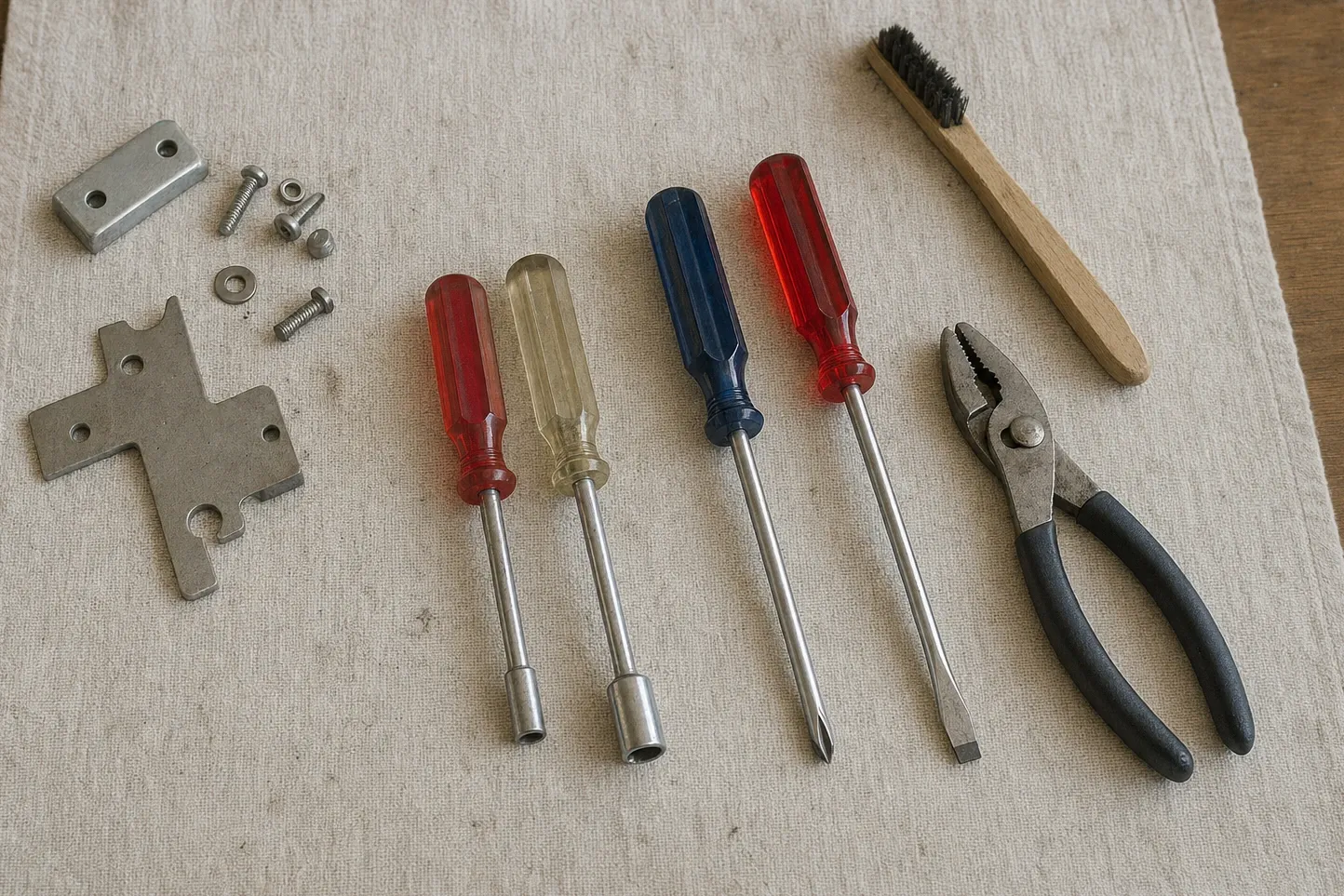
Nearly all of it can. Burners lift out once the racks and the trays are away. Igniters sit beside them. A briquette tray slides forward. The rotisserie motor comes off its mount with a thumbscrew. What lives behind the front panel — the valves, the manifold, the regulator at the back — is the short list of jobs where somebody needs to know what the enclosure is made of before a tool is picked up.
That is the question we answer first, and it is the one a drawing can answer before anyone drives out. Masonry enclosure or framed one, cut-out width, which side the gas stub comes up, whether there is a jacket around the firebox. Get those four right and an outdoor kitchen is a serviceable thing for decades. Get them wrong and a burner replacement becomes a mason.
-
Identify before you order
The series decides the part. Press a knob: a glow means one generation, a click means the other.
-
Keep the island intact
Most burner and igniter work is done from the front. We say up front when a job is not one of them.
-
Drawings welcome
Send the opening and the model and we will read it against the installation guide before the visit.
Working the same equipment all week is the whole trick: you learn where the rating plate hides on a Viking range before you learn anything else.
05 What we take on
Outside first, then the kitchen
Every page below opens on the sentences people actually say on the phone, and on what those sentences usually turn out to mean once somebody is standing in front of the thing.
-
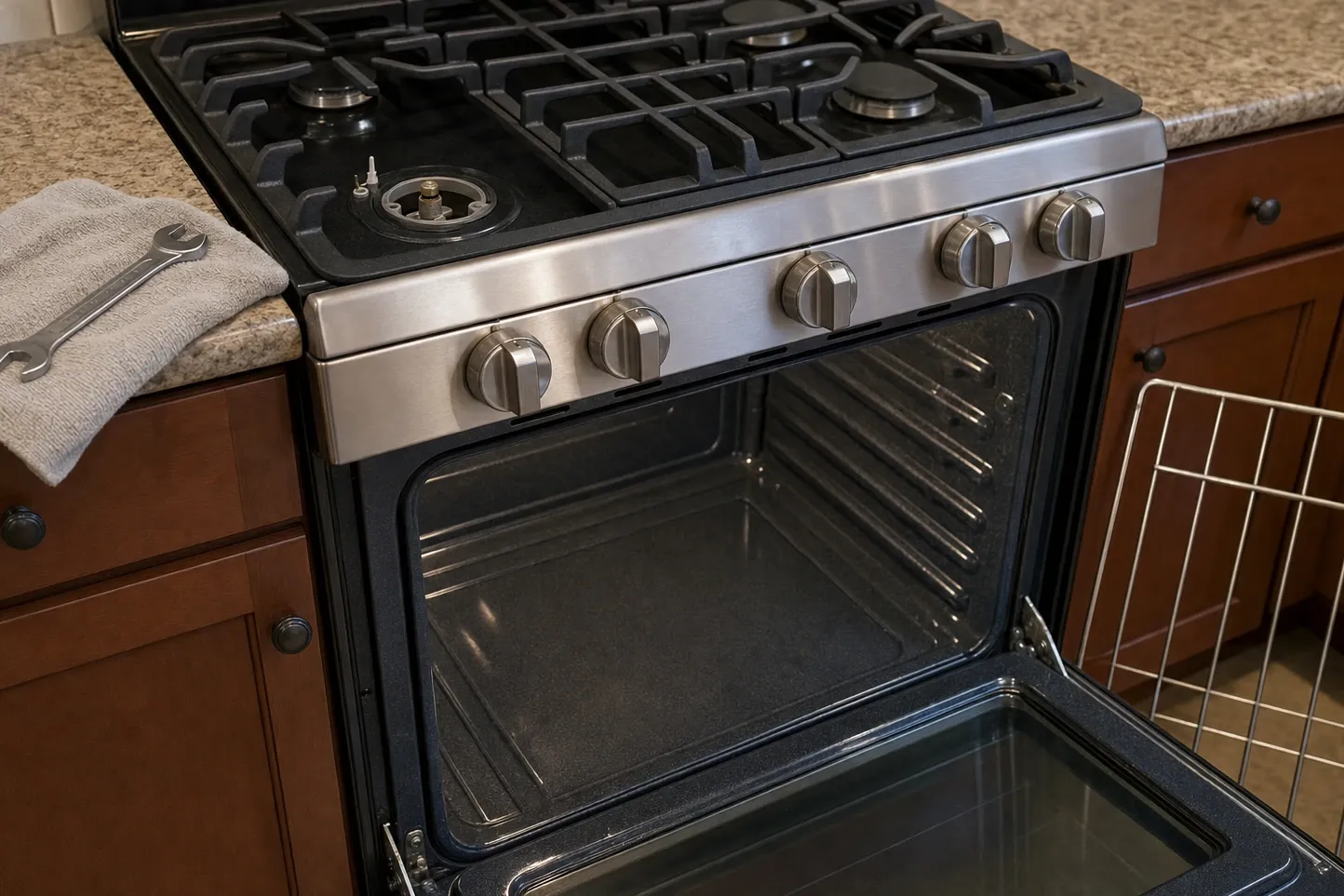 Outdoor Grill Repair Built-in and freestanding Viking outdoor grills, the burners and igniters inside them, the rotisserie burner across the back, and the regulator and manifold that feed the island.
Symptoms and diagnosis
Outdoor Grill Repair Built-in and freestanding Viking outdoor grills, the burners and igniters inside them, the rotisserie burner across the back, and the regulator and manifold that feed the island.
Symptoms and diagnosis
-
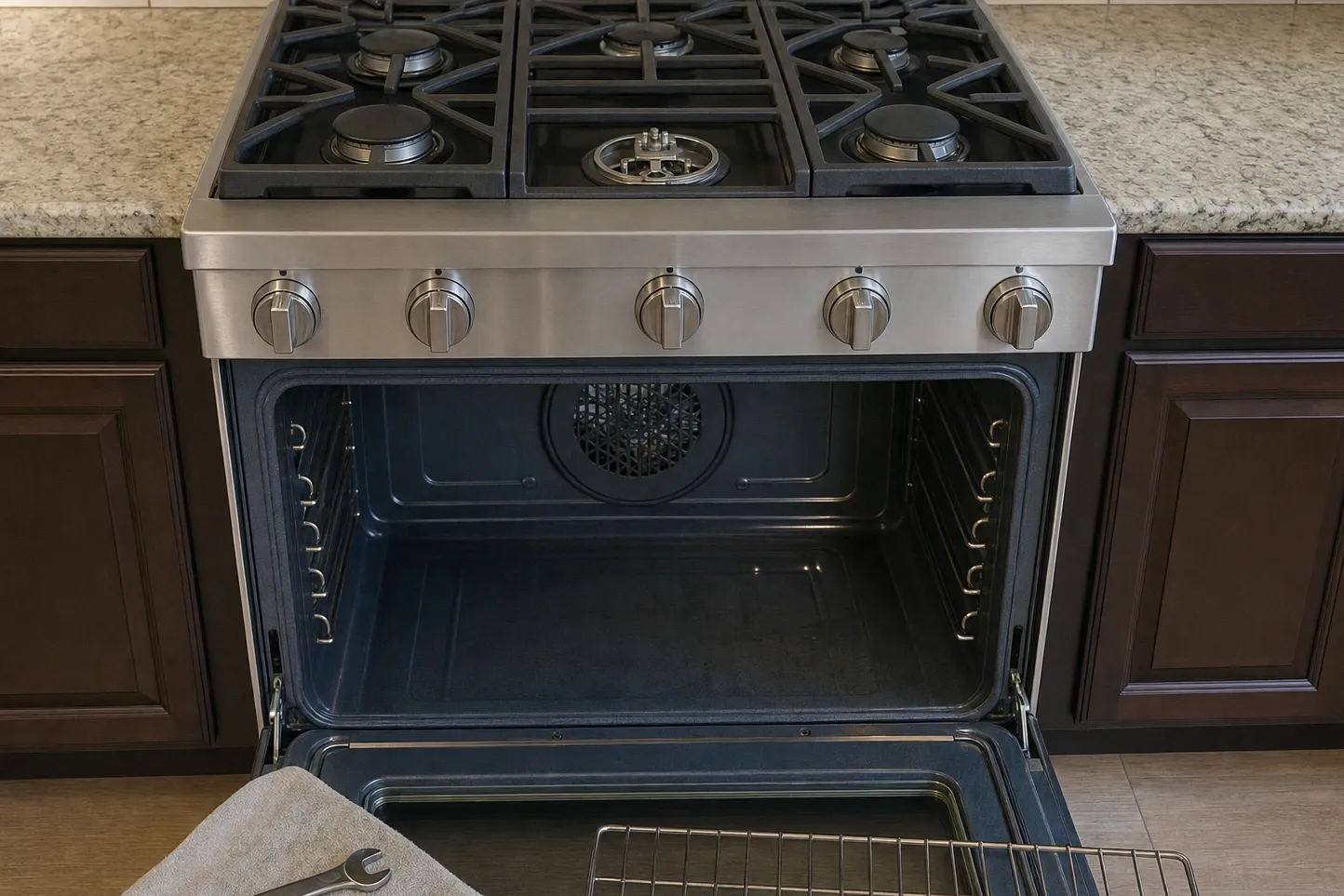 Range Repair Burners, igniters and valve work on Viking professional ranges and rangetops, all-gas or dual-fuel alike.
Symptoms and diagnosis
Range Repair Burners, igniters and valve work on Viking professional ranges and rangetops, all-gas or dual-fuel alike.
Symptoms and diagnosis
-
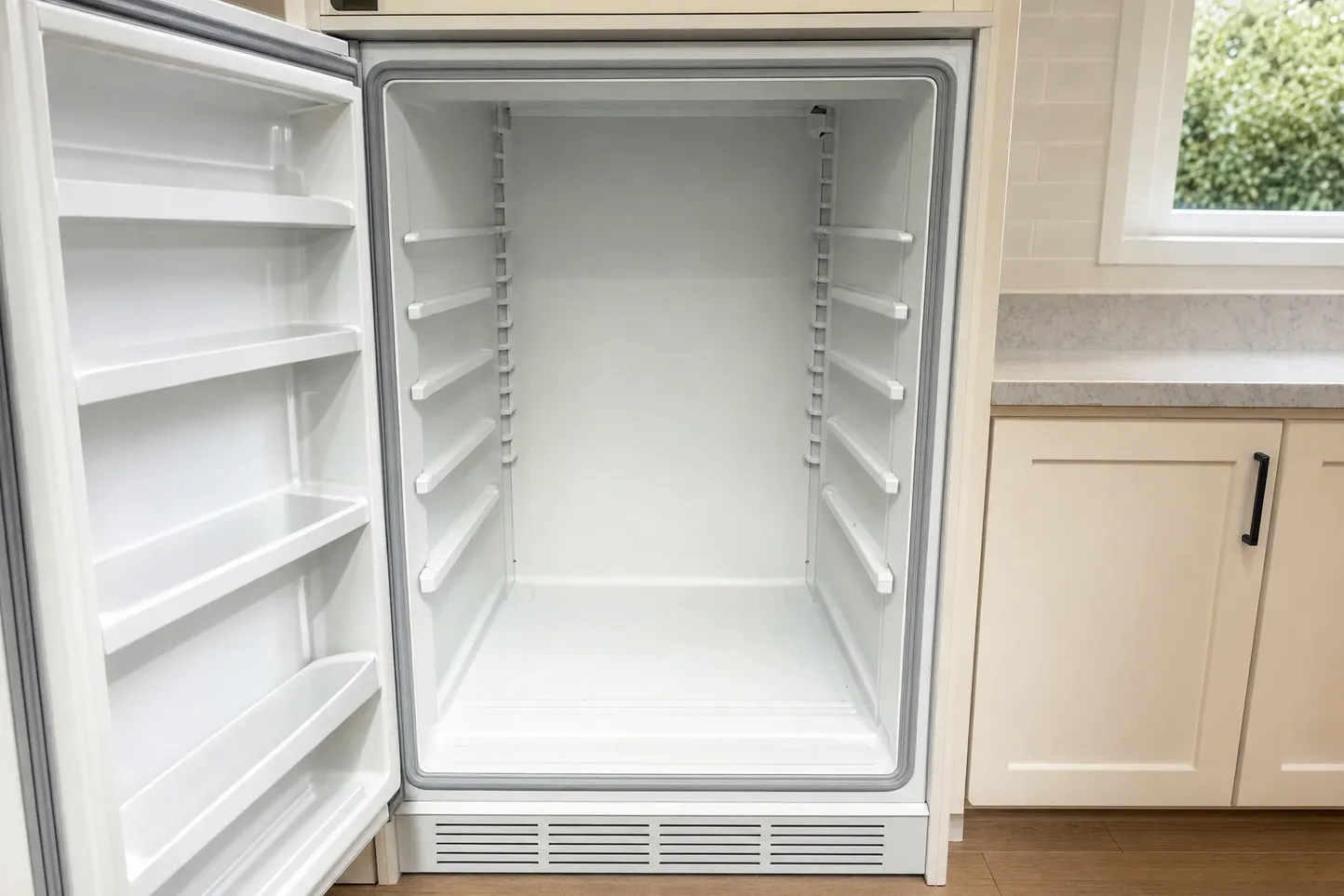 Refrigerator Repair Viking built-in refrigeration: lost cooling, silted drains, defrost faults, ice makers and wine storage.
Symptoms and diagnosis
Refrigerator Repair Viking built-in refrigeration: lost cooling, silted drains, defrost faults, ice makers and wine storage.
Symptoms and diagnosis
-
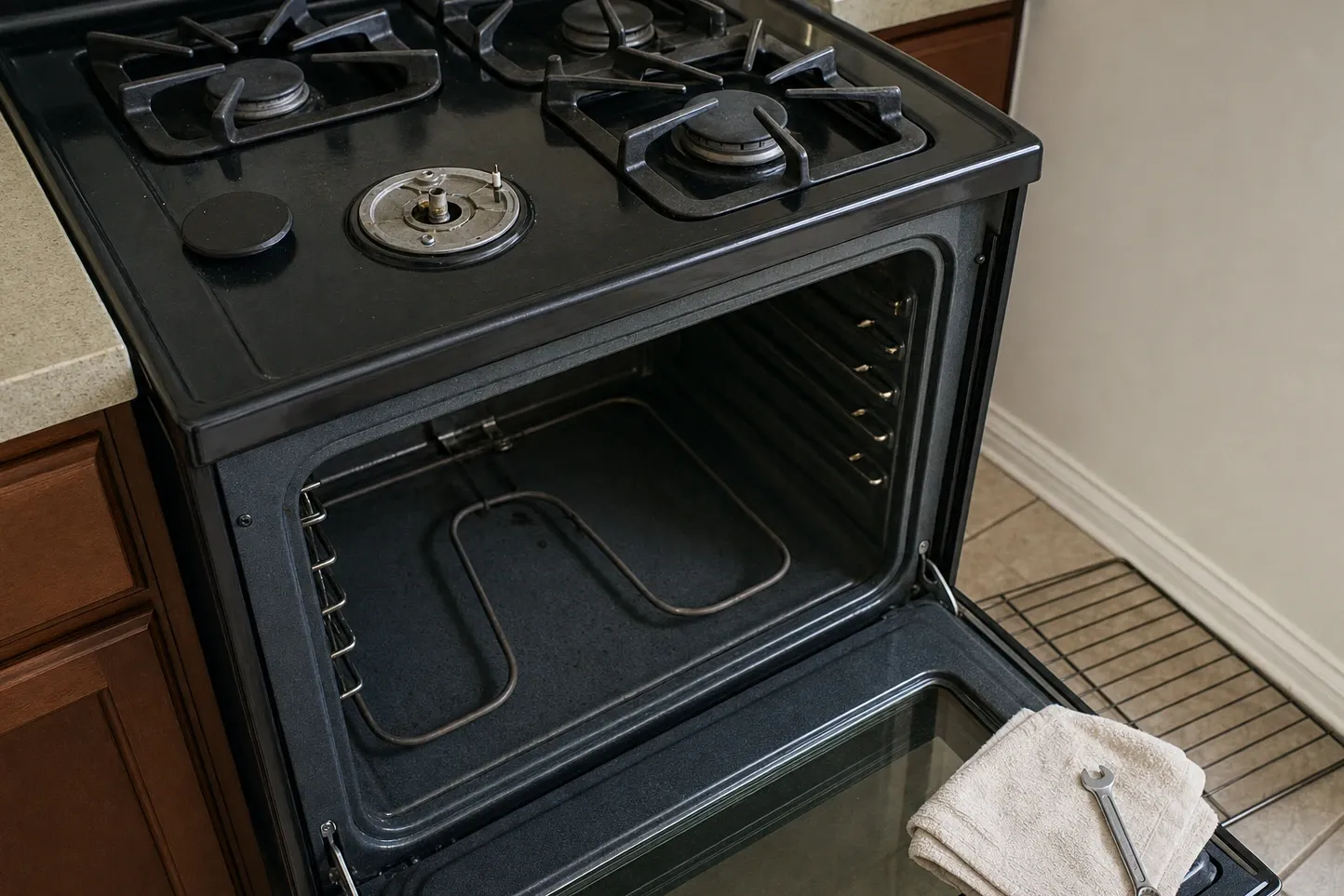 Oven Repair Viking wall ovens and range ovens — calibration drift, elements, ignition, and the board behind the panel.
Symptoms and diagnosis
Oven Repair Viking wall ovens and range ovens — calibration drift, elements, ignition, and the board behind the panel.
Symptoms and diagnosis
-
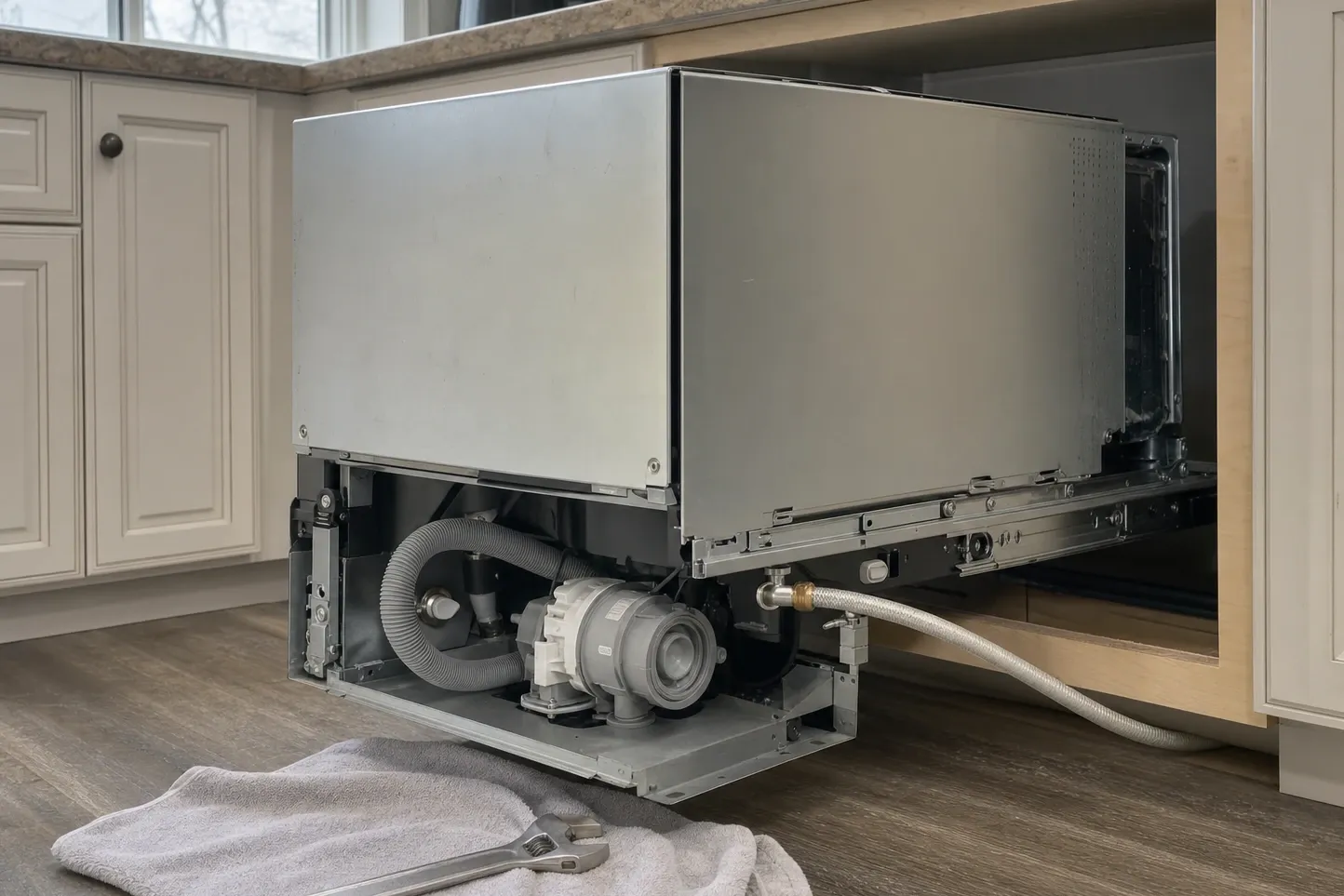 Dishwasher Repair Viking integrated and panel-front dishwashers: filling, draining, the wash pump, and tracing a leak.
Symptoms and diagnosis
Dishwasher Repair Viking integrated and panel-front dishwashers: filling, draining, the wash pump, and tracing a leak.
Symptoms and diagnosis
06 Where the van goes
Five places, five different kitchens
Salt off the ocean at one end of the sector, canyon heat and grit at the other, and 1920s houses in the middle that were never built for equipment this size. It decides what fails and how often.
-
 Brentwood 90049 Post-war ranch houses opened up into single-room kitchens, usually around one large professional range.
 -
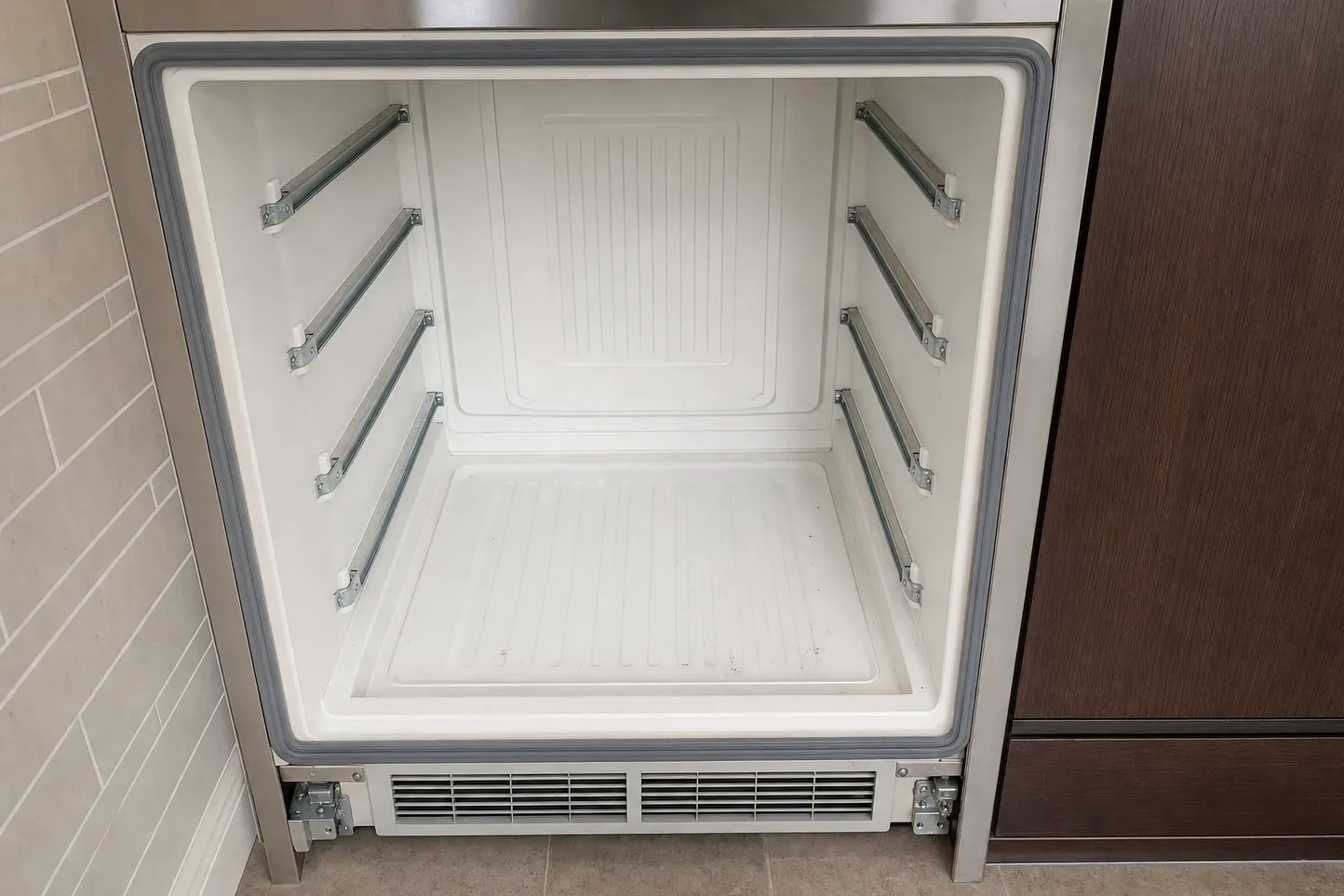 Pacific Palisades 90272 Bluff and Riviera houses where salt-laden marine air is hard on igniters, condensers and door seals.
 -
 Bel-Air 90077 Gated canyon estates with deep kitchens: a range plus paired wall ovens and built-in refrigeration.
 -
 Hancock Park 90004 Spanish Revival and Tudor homes from the 1920s, with tight original kitchens and butler’s pantries.
 -
 Malibu Terraces facing open water along the coast highway, where the grill lives outdoors all year and the salt never stops arriving.
07 Questions we get on the phone
Answers before you ring
Nothing here is a sales answer. Where the honest reply is “it depends”, it says what it depends on.
What does it cost to get someone out?
The visit and the diagnosis are $89, flat. Approve the repair and that $89 comes off the bill; decline it and the visit ends there, with nothing else to pay. You are told what the work costs before a panel is undone.
Do you work on the outdoor grill as well as the kitchen?
Yes, and the grill is the part of this shop that gets most of its attention: built-in Viking grills, the burners and igniters in them, the rotisserie burner across the back, and the gas run that feeds the island. Indoors it is ranges, wall ovens, built-in refrigeration and dishwashers.
Do you only work on Viking?
Viking is what this shop is set up for: professional ranges and rangetops, wall ovens, built-in refrigeration and dishwashers. That is where the parts knowledge and the service manuals sit, so that is what we take.
Will you have the part on the van?
Igniters, spark modules, thermostats, common relays, gaskets and fan motors travel with the technician, so a good share of calls finish in one visit. Sealed-system parts and control boards for older model runs are ordered, and you are told the wait before you commit.
How long does a first visit take?
Plan on an hour. Most of that is diagnosis: reading the burner or the board rather than swapping parts to see what happens. A range that needs pulling out of a tight run of cabinetry takes longer.
Is it worth repairing a range that is twenty years old?
Usually, yes — the burners, valves and igniters on a professional range are serviceable parts and the body outlives them. It stops being worth it when a cracked oven liner or a rotted-out gas manifold is involved, and if that is what we find we will tell you plainly.
Can you get to a gated street in Bel-Air or the Palisades?
Yes, and it helps if you tell us at booking so the technician can be listed at the gate. Same for a service elevator, a long private drive, or a kitchen that is hard to park near.
When should I stop using the appliance and just call?
A gas smell that does not clear, a burner that lights with a bang, a scorched smell or browning around a plug or a control, or water on a floor that reaches an outlet. Shut it off at the valve or the breaker and leave it.
08 After the visit
What people said afterwards
4.9 / 51,415 reviews
“Touch panel went unresponsive after a power flicker up the canyon. Instead of starting with the expensive board he checked the ribbon and the supply, found a scorched pin, and replaced only that.”
Vartan A. · Bel-Air · May 2026
“One burner kept sparking away long after the flame had lit. A spark electrode soaked from a boil-over, dried out and reseated. No parts needed, no drama.”
Aram T. · Brentwood · June 2025
“The ice maker started turning out hollow, half-size cubes and then quit altogether. He tested the inlet valve, found it barely opening, and changed it along with a water filter nobody had touched since the kitchen was remodelled.”
Sheldon G. · Bel-Air · December 2025
09 Before you call anybody
Four things not to wait on
Each of these wants something done before the phone is picked up, including before you ring us.
-
Gas at the grill
Turn every knob off, shut the supply valve under the island or close the cylinder valve, and walk away from it — do not lift the hood to look. Ring the gas utility, or 911 if it is strong. Nobody, us included, should be hunting a leak with the gas still on.
-
A gas smell that does not clear
Stop cooking, shut the valve behind or below the range, open a window and leave the door open. Ring the gas utility first. We can look at the manifold and the fittings after they have cleared it.
-
Anything scorched, or water reaching an outlet
Kill the breaker for that circuit rather than pulling the appliance out over a wet floor. Then call — a browned connector is a part, not a write-off, but it does not want to be run again first.
-
A built-in that has stopped cold
Move what matters to another fridge and keep the doors shut. A full compartment holds temperature for hours, and every opening costs you some of that.
The line is answered 24/7 on (213) 600-7131. Work itself is carried out 8:00 am – 8:00 pm, seven days.
Tell us what it is doing
A phone call and two minutes of description usually narrows it down before anyone gets in the van.
$89 for the visit and the diagnosis, credited against the repair. Work carried out 8:00 am – 8:00 pm, seven days.